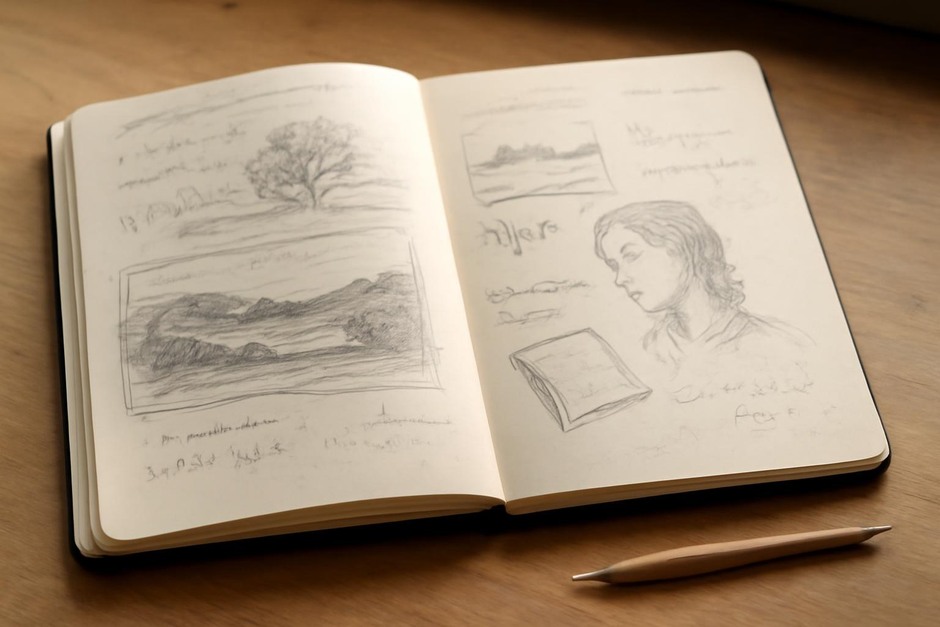
Project Pause and Pivot: Reflective Checkpoints for Long-Term Work
The case for checkpoints
Long-term projects benefit from periodic review. Without pauses, small decisions accumulate into substantial divergences from initial intentions. Checkpoints provide moments to step back, assess materials and composition, and decide whether to continue as planned, pivot, or archive the work. These structured reflections reduce reactive changes and support intentional development.
Designing a checkpoint routine
- Set intervals: Use time-based or milestone-based checkpoints—every two weeks, after a series of studies, or at specific compositional stages.
- Keep a concise checklist: A short list focused on materials, composition, and fit with project aims keeps reviews practical and consistent.
- Document outcomes: Record decisions and reasons so later choices can be traced and learned from.
Sample checkpoint checklist
Compose a checklist with three core headings: Materials, Composition, and Direction.
- Materials: Are current materials performing as expected? Are there supply issues, unexpected reactions, or waste that require a change?
- Composition: Is the visual balance working? What elements feel unresolved? Does colour, value, or scale need adjustment?
- Direction: Is the project moving toward the intended outcome? Has the intention shifted, and if so, is that shift intentional or accidental?
Practical methods for reflection
Conduct checkpoints away from the immediate work surface. Move the piece to a neutral space or step back long enough to interrupt habit-driven responses. Photograph the work under different lighting, make a short audio note describing decisions, and sketch alternatives. These varied records disrupt routine and reveal aspects that might otherwise be missed.
Pivots and small experiments
Pivots need not be large. A small compositional test, a subtle colour adjustment, or a material substitution can reset momentum without discarding accumulated work. Treat experiments as contained events: do the test on a separate sheet, document the result, and decide whether to incorporate it. This approach protects the core of the project while allowing for innovation.
Closure and archiving
Not every checkpoint will lead to continuation. Some projects reach a natural endpoint or require archival. Closing a work is itself an informative practice. Document the final state, note what materials and choices defined the piece, and file this information alongside other project documentation. Archiving with care preserves the learning for future use and prevents unused materials from lingering indefinitely in the studio.
Checkpoints transform long-term projects from an endless push into a series of reflective decisions. They foster clarity about materials and composition, and they make it easier to pivot thoughtfully. Over time, these pauses create a disciplined yet generous approach to sustained creative work.