Sketchbook Systems: From Loose Pages to Meaningful Archives
Why a system matters
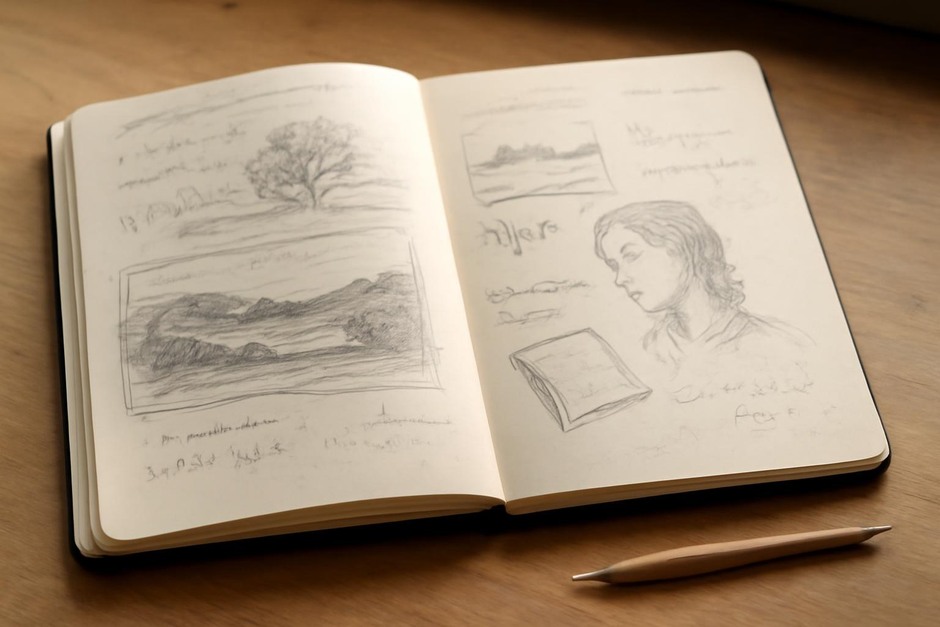
Sketchbooks are the primary record of visual thinking for many makers. Left unmanaged, they become stacks of loose, unindexed pages that are difficult to revisit. A system turns the sketchbook into a living archive: a place for quick studies, material tests, and incremental discoveries that can be retrieved and reflected on when needed.
Principles of a good sketchbook system
- Be generous with start points: Carry smaller notebooks for quick studies and a larger one for more sustained exploration. Different sizes encourage different kinds of thinking.
- Use consistent metadata: Date entries, note location and lighting conditions, and add short tags or keywords. These small additions make later searches meaningful.
- Allow for loose pages: Bindings can be limiting. Keep an envelope or folder for loose pages that you can later paste into a dedicated archive or store in a labelled box.
Material considerations
Paper choice affects day-to-day practice. Lighter-weight paper invites quick marks and low-stakes experimentation; heavier paper handles wet media and collage. If you switch between media, consider keeping two concurrent sketchbooks or using mixed-media paper to avoid frequent transfers. For durability, choose archival paper only where long-term preservation is intended—otherwise, select materials that balance cost, weight, and the freedom to experiment.
Indexing and retrieval
Without retrieval, sketches become isolated moments. Create a simple index at the front or back of each sketchbook: list key entries, dates, and one-line descriptions. For a personal digital overlay, photograph pages and store them with searchable tags. The aim is not exhaustive cataloguing but a lightly structured record that supports recall and reflection.
From sketch to project
Use sketchbooks to stage project development. Reserve a section for project-specific work or create a project folder where selected pages are gathered. When a study proves productive, transfer the most relevant pages into a project file with annotated notes on materials, decisions, and next steps. These curated packets of work become the starting points for finished pieces and ensure that experiments inform larger aims.
Rituals that sustain the habit
- Weekly review: Spend thirty minutes each week flipping through recent pages, making marginal notes, and choosing a few items to transfer to the archive.
- Monthly selection: At month end, pick three pages to revisit intentionally in a longer session. This practice sharpens perception and builds a bridge between quick studies and developed work.
- Material maintenance: Keep a compact kit of preferred pens, pencils, and adhesive on a dedicated shelf so you can start quickly and minimize setup barriers.
Reflection as practice
Sketchbooks are not simply repositories of raw ideas. They are tools for reflection. Periodically revisiting older pages reveals patterns, recurring motifs, and technical progress. Treat these moments as gentle reviews rather than audits. The value lies in noticing what returns, what shifts, and how small experiments accumulate into a recognizable visual language.
A considered sketchbook system supports spontaneity while creating pathways for memory. It keeps making open and retrievable, ensuring that the quiet work of observation can inform future projects with clarity.